
Greenup County Deed Types
Deeds are only the start in Greenup County. The Clerk's published schedule lists contracts for land, deed restrictions, easements, condominium instruments, leases, options, plats, and correction deeds alongside standard sale deeds. Mortgages, releases, liens, and lis pendens appear there too. The instrument type shows what was filed. Only reading the full document reveals the interest conveyed or reserved.
| Deed Type | What It Does | Common Use |
|---|---|---|
| General warranty deed | Conveys land with stated title promises | Ordinary sale |
| Quitclaim deed | Conveys whatever interest the signer has | Interest release or title cleanup |
| Correction deed | Corrects a stated error in a prior deed | Name or description correction |
| Affidavit of descent | Records facts about an inherited interest | Estate-related title trail |
| Contract or option | Records a land agreement or purchase right | Future or conditional transaction |
A mortgage or lien is an encumbrance, a recorded claim rather than a transfer of ownership. A release shows a prior claim was satisfied. Read linked instruments as one sequence, never in isolation.
Greenup Clerk Recording Desk
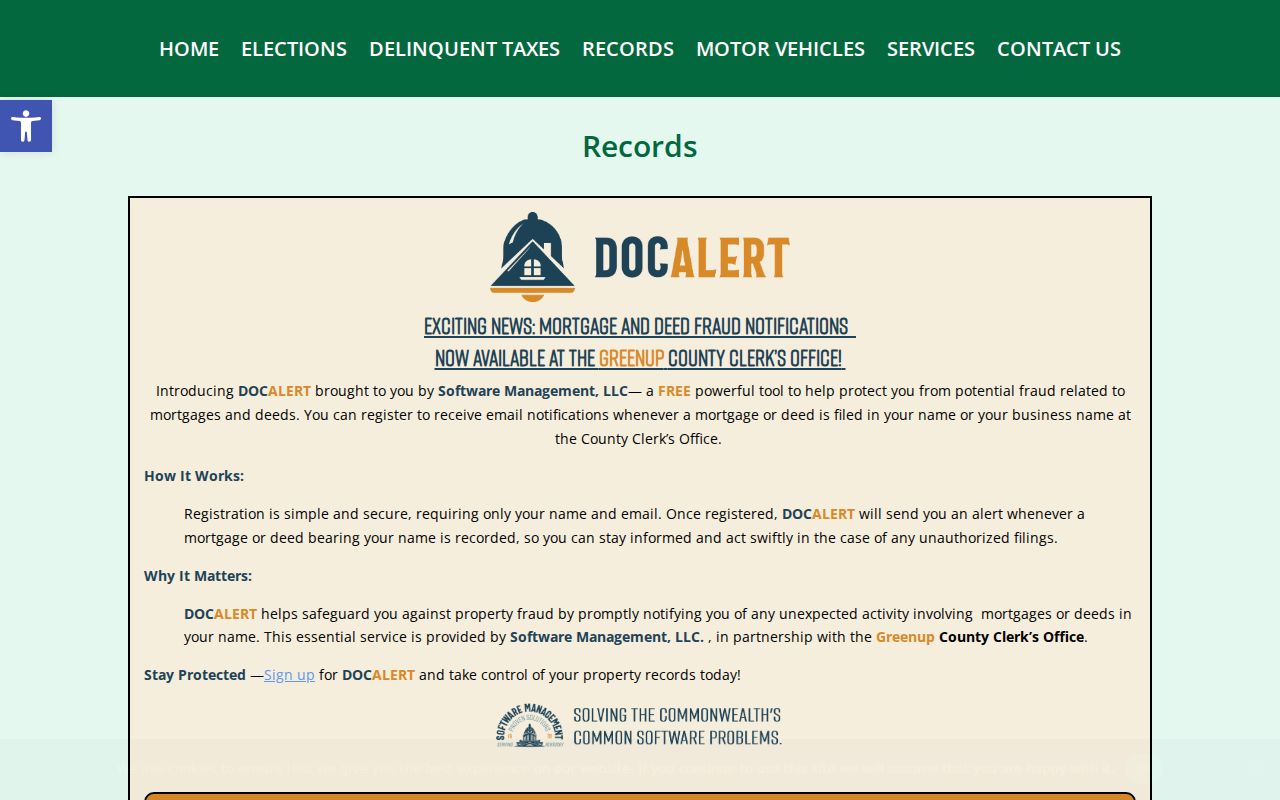
The Greenup County Clerk records page is the official starting point for deed records. The main office sits in Courthouse Room 208, Greenup. Weekday hours run 9:00 to 4:30. The phone number is 606-473-7394. Flatwoods and South Shore branches also serve the county. Two official pages list different South Shore street addresses, so confirm the location before traveling or mailing. Bring names, dates, the address, APN, and legal description. Include any book-page reference. Ask for both the index entry and the recorded image. For remote work, say whether you need a plain or certified copy. Request a current cost quote. The Clerk's records page also displays the county's online land-record access route.
Check the live page for current fees and forms before ordering.
eCCLIX Access for Greenup Deeds
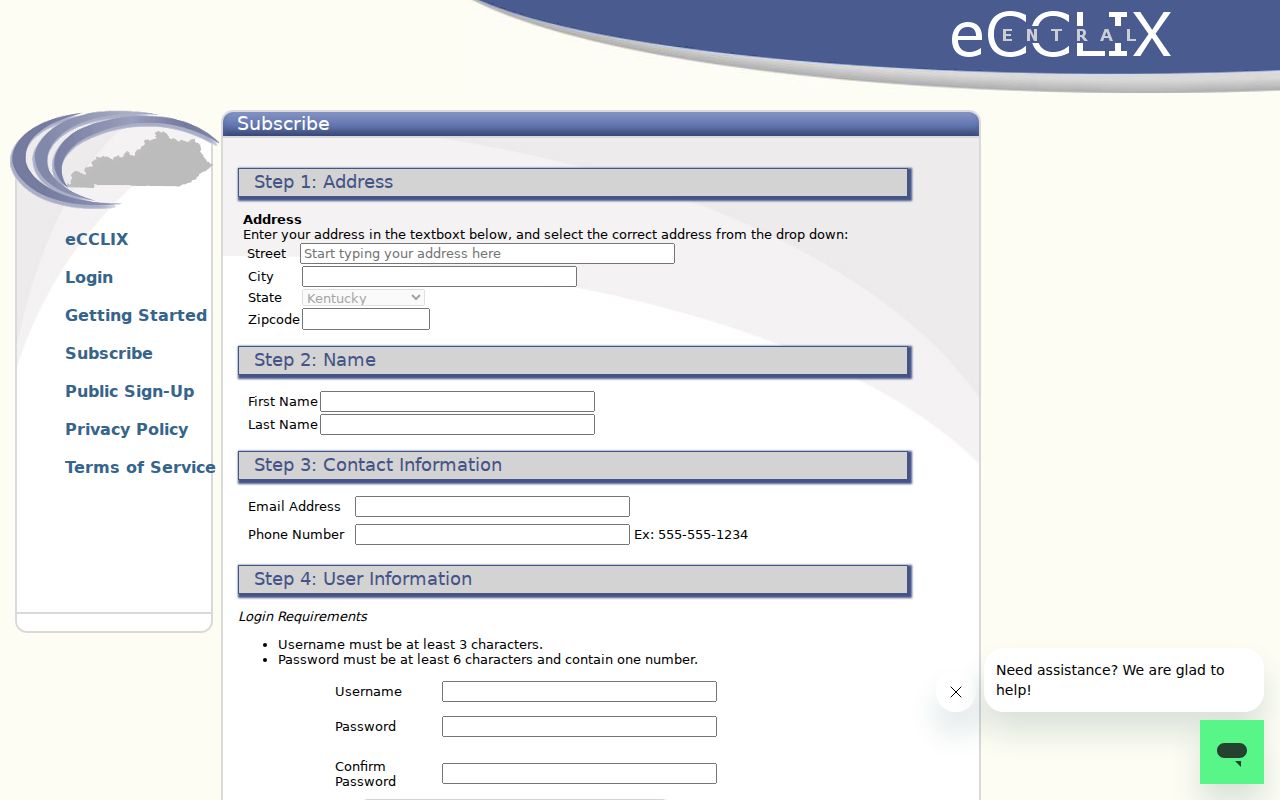
The Clerk links eCCLIX for Greenup County deed records. A resident option covers noncommercial personal use in Greenup County only, with five free searches per day. A commercial subscription is separate. eCCLIX does not state its Greenup coverage start year, pagination, or image rules, so ask the Clerk what the online span includes. That gap matters. A no-result screen cannot prove an instrument was never recorded if the relevant year or book falls outside the online span. Confirm the cutoff with the Clerk. Then use deed books, reverse indexes, microfilm, and archives. The resident enrollment page documents the Greenup access path.
Enrollment collects contact and account details, not deed results.
Read Greenup Grantor-Grantee Entries
A grantor-grantee index arranges recorded instruments by party. The grantor gives the interest; the grantee receives it. Once you locate a likely deed, verify the parcel through the legal description, subdivision, lot, acreage, APN if indexed, and any prior instrument cited.
- Find the current owner's acquiring deed with that party as grantee.
- Read the grantor and the deed's prior-reference language.
- Search that grantor as an earlier grantee and match the same land.
- Repeat until the portal stops, then continue through books or reverse indexes.
- Grantor
- The party transferring an interest.
- Grantee
- The party receiving an interest.
- Chain of title
- The linked sequence of transfers affecting the same land.
- Book and page
- The location assigned to a recorded document in the Clerk's books.
Fields to Save From Greenup Deeds
A complete request saves repeat trips. Start with instrument type, recording date, grantor, and grantee. Add the book and page or instrument number, legal description, subdivision and lot, consideration or tax-stamp detail if shown, parcel number if indexed, return address, and any prior-instrument citation. The same inventory works whether you search online or at the counter.
| Party fields | All grantors and grantees, with exact spelling |
|---|---|
| Record locator | Book/page or instrument number and recording date |
| Land match | Subdivision, lot, acreage, calls, and APN if present |
| Cross-references | Prior deeds, releases, plats, mortgages, or easements |
Use the same land facts at every step. A similar party name alone cannot join two Greenup County deeds into one chain.
Greenup Plat Names as Deed Keys
Old legal notices hold names that unlock deed records. Maplewood Addition, for example, is paired with parcel 183-10-10-074 and Deed Book 532 page 533. Highlandview Addition traces to Plat Book 4 page 9. Dr. O.P. Clark's Addition of the Town of Russell and the Means & Russell Iron Company's Bellefonte Subdivision show how an old addition or industrial name can persist in a modern land trail. Treat the notice only as a search seed. Request the recorded plat image, the dedication, later revisions, and the deed citing the lot. Then compare each citation against the current PVA card in Greenup County. Lot and block descriptions carry real weight. Pair them with the correct plat book and page. Insider tip: copy the full legal description before searching. The old addition name may succeed where the present street alone does not.
Greenup Mortgage and Release Chains
Good title work follows burdens as well as deeds. In Greenup County, the Clerk's schedule separates mortgages, assignments, modifications, subordinations, and full and partial releases. Judgment liens, mechanic's liens, lis pendens, and state or federal tax liens are recorded too. Record the original instrument. Note every later filing that cites it. A proper release matches the same claim through parties, references, and land, and a fixture filing may appear in real-estate records while Kentucky Secretary of State UCC records cover personal-property security interests. Neither one is a deed.
Older Greenup Deed Books
Greenup County was carved from Mason County in 1803 and organized a year later. That early date matters for deed records. A parcel chain running before county formation may continue in Mason County sources. So older land entries can sit in a parent county rather than Greenup itself. The Greenup County Public Library helps here. Its genealogy collection holds regional maps, local binders, cemetery resources, yearbooks, and in-house databases. It also carries an "Old Kentucky Entries and Deeds" link. FamilySearch also catalogs Greenup wills and land materials. But access may depend on sign-in or library status.
Ask the Clerk about the exact online cutoff. Also ask where the older direct and reverse indexes live. From there, the library, microfilm, deed books, or an archive referral can close the chain. A portal gap is not a record gap.
Greenup DOC ALERT Notices
The Clerk offers DOC ALERT as a free notice service. It is tied to Greenup County deed records. Register a personal or business name. The service flags when a deed or mortgage is recorded under that name. An early warning has limits, though. It does not confirm the instrument touches the right parcel. Nor does it prove the filing is valid.
Reach DOC ALERT only through the official Clerk records page. If a notice arrives, pull the index entry and document image. Compare the land and the parties, and contact the Clerk about any suspected error. An alert is not a title search.
Request a Greenup Deed Copy
Copies of Greenup County deed records come three ways: online, at the Clerk's counter, or by written request. The written request needs enough detail to locate the filing. The Clerk FAQ lists a $50 recording charge. That covers the first five pages. Each added page costs $3, plus transfer tax where applicable. Those fees are for recording. They are not a copy-price quote. Ask what a plain or certified copy will cost before you order.
A written open-records request works best with precise detail. Identify the parties, the document type, and the recording date range. It should also give the book and page or instrument number. Add the address, parcel number, legal description, and preferred format. Kentucky's Open Records Act allows signed written requests. Those may go by hand, mail, fax, or email. It generally calls for a response within five business days, subject to lawful exceptions.
Recorded, not guaranteed. Greenup County's index shows filed instruments. It does not give a title opinion, resolve every defect, or account for every unrecorded claim.